The best santoku knives balance comfortable control with the blade features that matter for your prep, from edge geometry to food release. These six picks range from compact, sheath-equipped designs to forged 7-inch knives, so compare handling and care details before choosing.
Quick Top Products
imarku 7-Inch 10Cr15CoMoV Santoku
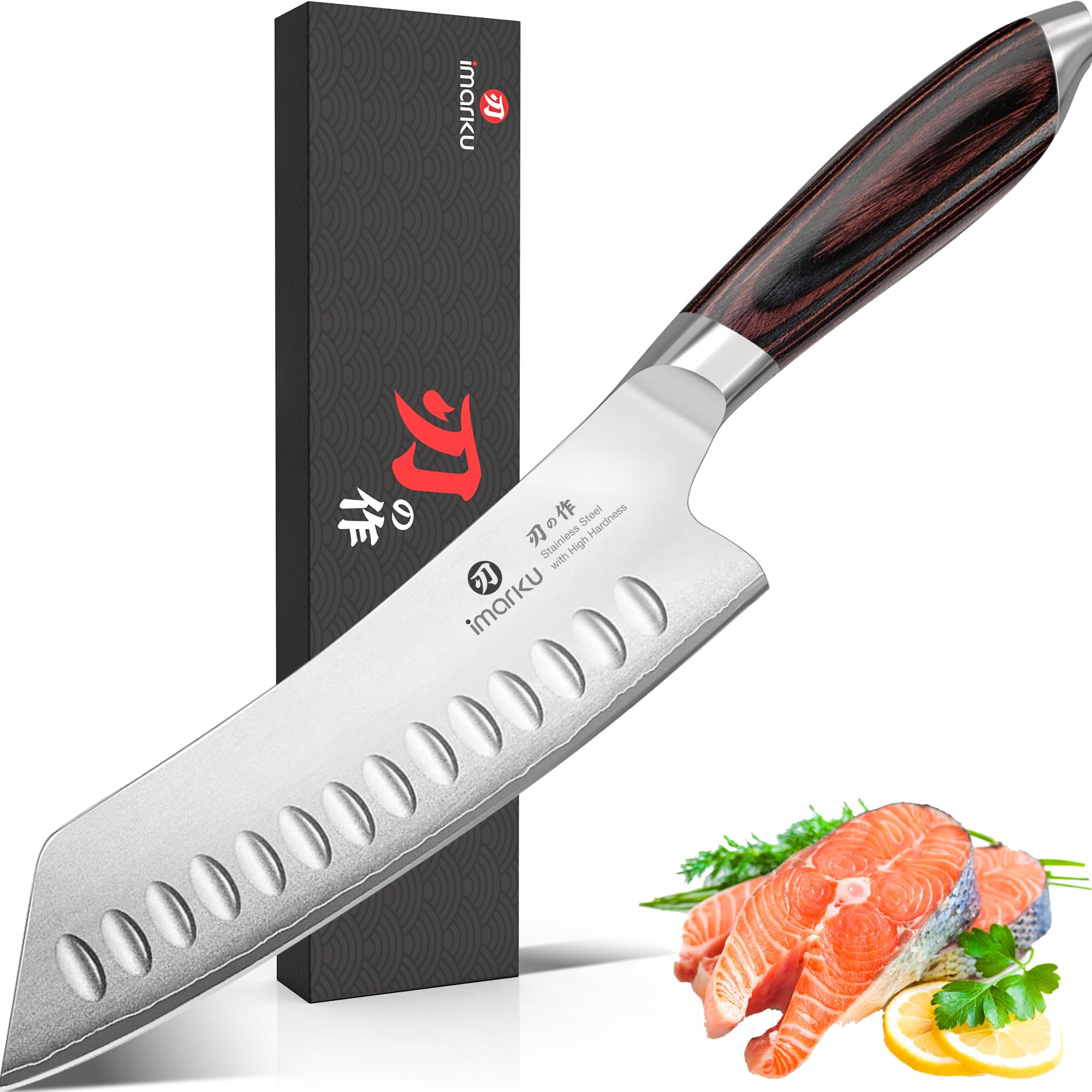
- 7-inch blade with a 10Cr15CoMoV steel core and stainless cladding.
- 12±2° edge on each side for controlled slicing.
- Hollow-edge dimples help reduce sticking on moist or starchy foods.
Best For: Home cooks who want a clad stainless blade and dimples to help ingredients release during everyday prep.

KEEMAKE 7-Inch Santoku
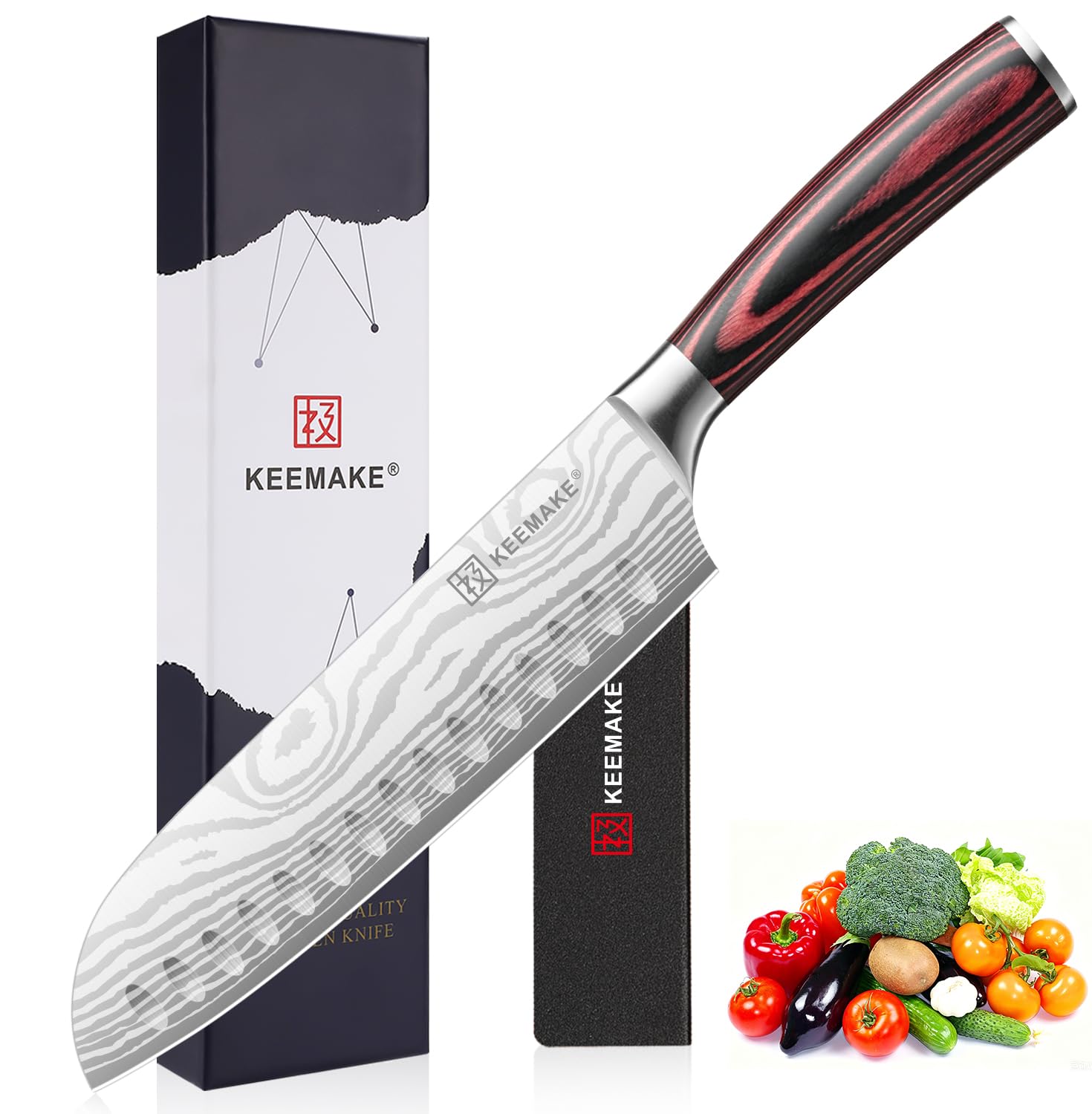
- 1.4116 high-carbon stainless steel blade hardened to 58 HRC.
- The 8.16 oz knife has a 7-inch blade for controlled prep.
- Wave-patterned blade helps reduce friction and food sticking.
Best For: Cooks seeking a forged 7-inch knife with a stated lightweight feel and a wave-pattern blade.
imarku 7-Inch Powder Steel Santoku
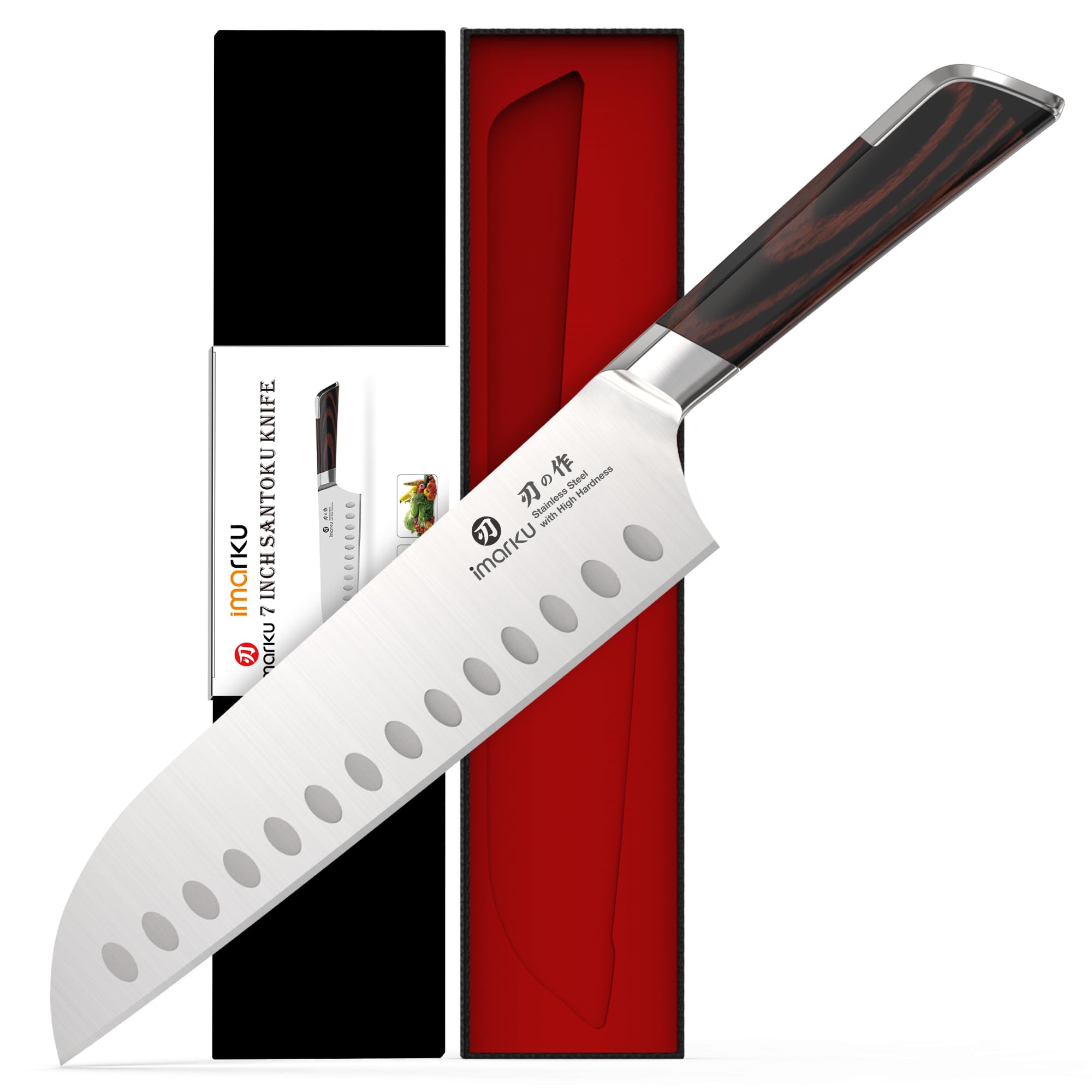
- 7-inch blade forged from powder steel.
- HRC 62±1 hardness and a mirror-finished bolster.
- Ergonomic PakkaWood handle with a diamond-profile contour.
Best For: Buyers who want a forged powder-steel santoku with an ergonomic PakkaWood handle and gift-ready packaging.
imarku 7-Inch High-Carbon Santoku
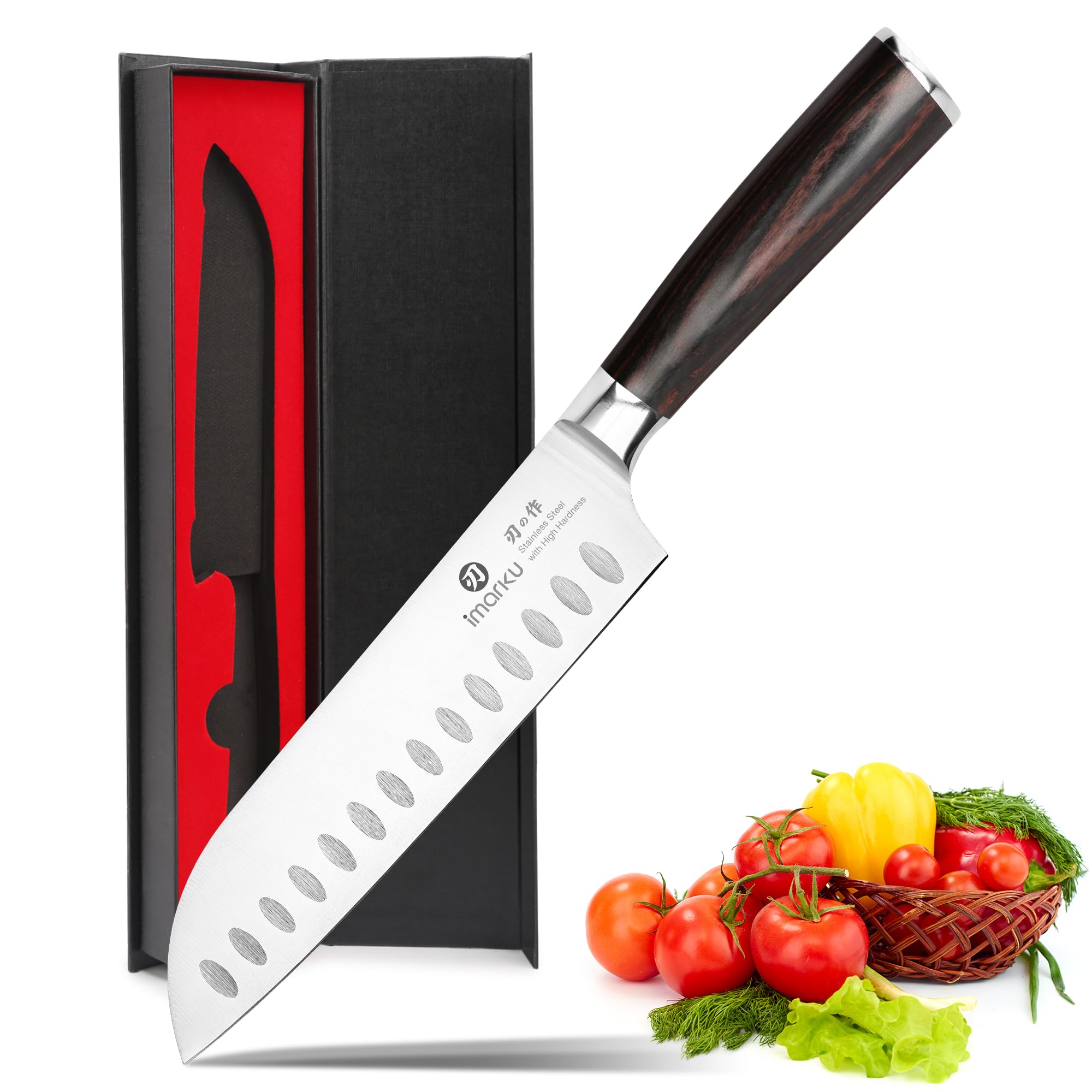
- 7-inch santoku made from high-carbon stainless steel.
- Hand-polished edge is 15–18 degrees per side.
- Scalloped hollow edge helps keep food from sticking.
Best For: Home or restaurant cooks who want a hollow-edge blade for general chopping, slicing, and mincing.
Zyliss Comfort 5.9-Inch Santoku
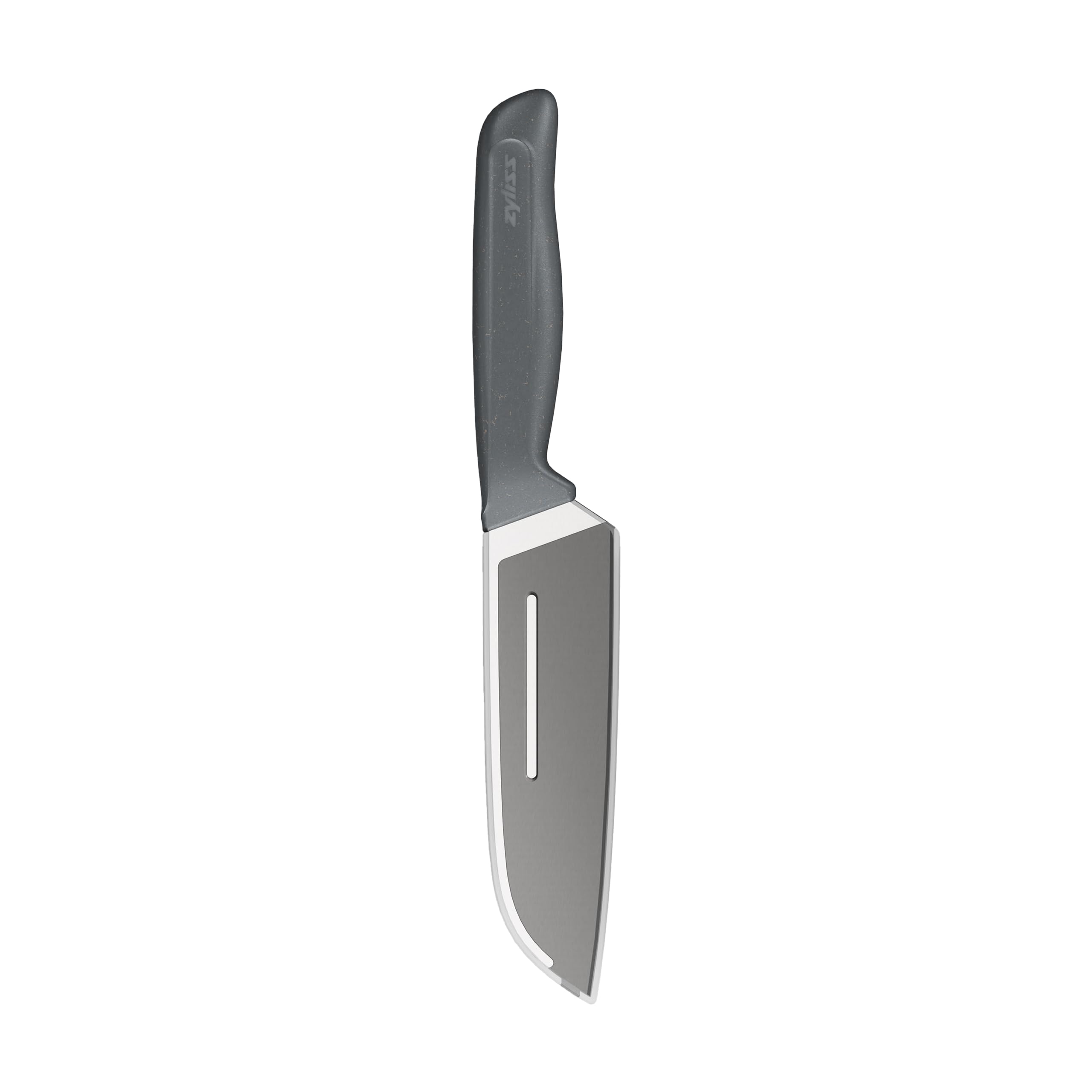
- 5.9-inch Japanese stainless steel santoku blade.
- Protective blade guard supports drawer or camping storage.
- Contoured non-slip handle has finger indents for different hand sizes.
Best For: Cooks who value a compact santoku with a protective blade guard and a non-slip handle.
imarku 7-Inch Japanese Santoku
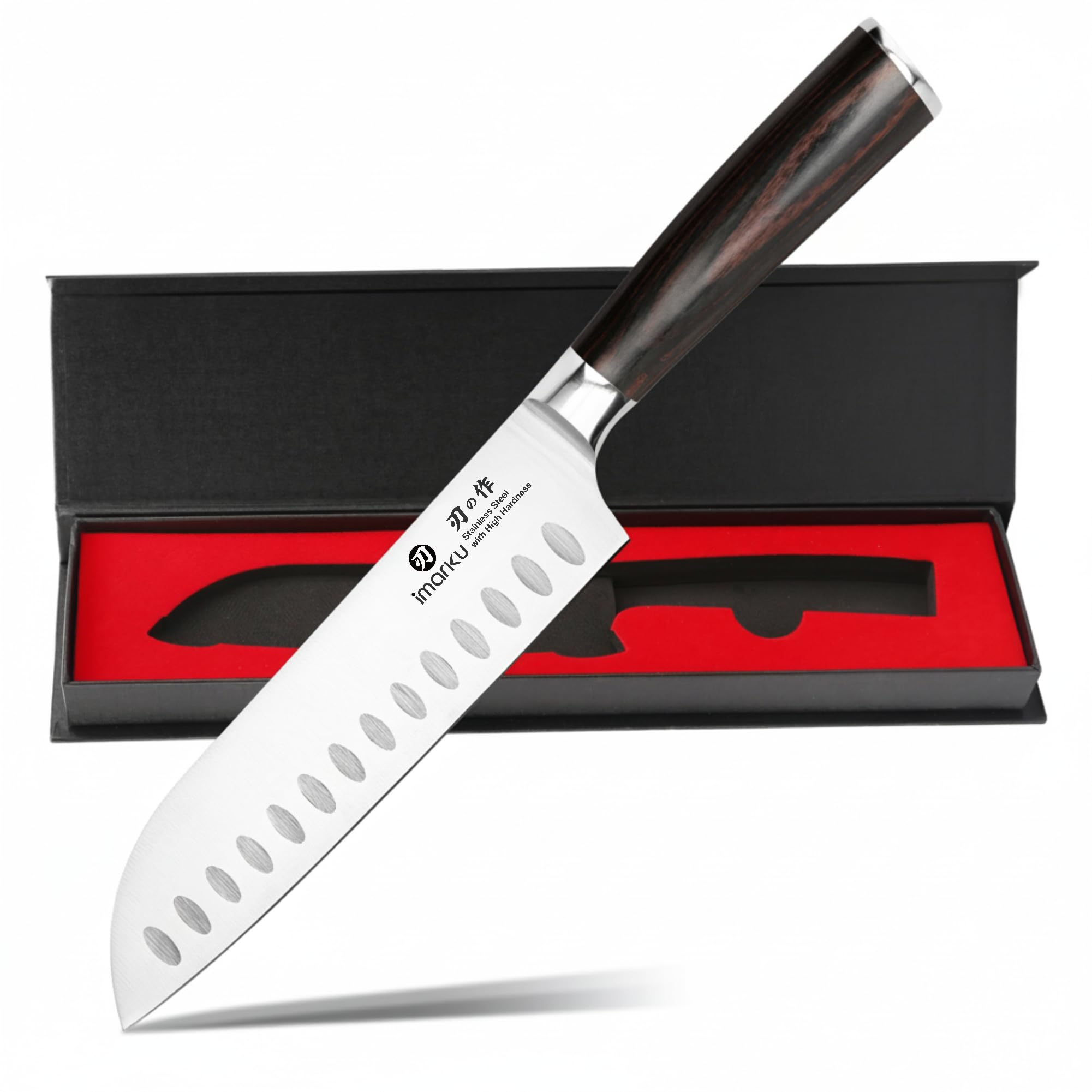
- Japanese high-carbon stainless steel blade.
- Hollow blade design is intended to minimize sticking.
- The knife weighs 190 g and has an ergonomic Pakkawood handle.
Best For: Cooks who want a lightweight 7-inch santoku with a hollow blade and a Pakkawood handle.
Hollow-Edge Clad Steel
imarku Japanese Santoku Knife 7 Inch, 10Cr15CoMoV 3-Layer Stainless Steel
This 7-inch imarku santoku pairs a 10Cr15CoMoV high-carbon stainless steel core with protective stainless cladding and a 59±2 HRC hardness. Its 12±2° per-side edge is intended for precise slicing, while hollow-edge dimples help reduce sticking with moist or starchy ingredients.
The raised Pakkawood handle provides knuckle clearance, and its balanced shape supports steady chopping. It is a versatile option for vegetables, boneless meat, and fish.
Check how the handle shape feels in your grip and whether you prefer a santoku with a narrower edge angle.
Best For: Home cooks who want a clad stainless blade and dimples to help ingredients release during everyday prep.
| Pros | Cons |
|---|---|
|
|
Choose this imarku if you want a single 7-inch knife for produce, boneless meat, and fish, with a raised handle and food-release dimples. Its clad steel and defined edge angle give buyers more material and geometry detail than some basic kitchen knives here.
Before buying, consider whether the 12±2° per-side edge suits your sharpening preferences, and check the care guidance for the blade and handle.
Lightweight Forged Control
KEEMAKE 7" Santoku Knife, Razor Sharp Chef Knife with Ergonomic Handle
KEEMAKE's 7-inch santoku uses 1.4116 high-carbon stainless steel hardened to 58 HRC, with a hand-sharpened 12–15° edge per side. The knife weighs 8.16 oz, and its forged profile is designed for push cuts, slicing, dicing, and chopping.
A shaped Pakkawood handle supports a secure hold, while the wave-patterned blade is intended to reduce friction and food sticking. Its flatter edge emphasizes board contact, with a gently curved tip for limited rocking.
This blend of agile handling and broad everyday use suits cooks who want a santoku alternative to a larger chef knife.
Best For: Cooks seeking a forged 7-inch knife with a stated lightweight feel and a wave-pattern blade.
| Pros | Cons |
|---|---|
|
|
This is a good fit for cooks who favor push cutting and want a stated weight alongside the steel hardness and edge angle. The 7-inch forged profile can handle produce, fish, poultry, and boneless meat, and its wave pattern addresses food cling.
Check that the flatter edge and limited rocking motion match your cutting style. Care and sharpening guidance is not specified, so confirm those details before purchase.
Powder Steel and Gift Box
imarku Japanese Santoku Knife 7 Inch, Ultra Sharp Chef Knife, Professional Grade Powder High Carbon Steel Forged Kitchen Knife, PakkaWood Ergonomic Handle, Gifts for Women and Men
This imarku santoku has a 7-inch blade forged from powder steel, with a stated HRC of 62±1. Its ergonomic PakkaWood handle has a diamond-profile contour intended to provide a secure grip, while the mirror-finished bolster is designed to balance the blade and handle.
The blade is described as stain-resistant and corrosion-resistant, making it suited to regular kitchen prep when cared for appropriately. A refined gift box is included.
Buyers should weigh the premium material details against the limited care information, and confirm the upkeep that this particular blade requires.
Best For: Buyers who want a forged powder-steel santoku with an ergonomic PakkaWood handle and gift-ready packaging.
| Pros | Cons |
|---|---|
|
|
Consider this knife if powder-steel construction, a contoured PakkaWood handle, and gift packaging are priorities. Its 7-inch size keeps it in the same general prep role as other santoku picks, while its stated hardness gives a distinct material profile.
The record does not provide a sharpening method or detailed care routine, so check those requirements before choosing it for frequent kitchen use.
Hollow Edge for Daily Prep
imarku Chef Knife 7 Inch Kitchen Knife Ultra Sharp Santoku Knife - High Carbon Japanese Chefs Knife, Kitchen Gadgets 2025, Apartment Essentials, Birthday Gifts for Him Her, Best Gifts for Women Men
This 7-inch imarku santoku is made from high-carbon stainless steel and has a hand-polished edge of 15–18 degrees per side. Its scalloped hollow edge creates gaps between the blade and food to help limit sticking during slicing, dicing, and mincing.
The ergonomic Pakkawood handle is shaped to provide a comfortable grip and reduce wrist tension. It is intended for a broad range of everyday ingredients, including meat, vegetables, fruit, and bread, and is presented as suitable for home and restaurant kitchens.
Check the care needs of the handle and steel before making it a daily-use knife.
Best For: Home or restaurant cooks who want a hollow-edge blade for general chopping, slicing, and mincing.
| Pros | Cons |
|---|---|
|
|
This imarku is a practical candidate for cooks who want a versatile santoku with a hollow edge and a comfortable Pakkawood handle. The 15–18° per-side edge is a useful point to compare with knives that specify narrower angles.
It covers familiar tasks from produce prep to slicing meat, but the care instructions are not provided here. Check cleaning guidance and handle upkeep if the knife will see frequent use.
Sheath for Drawer or Camp Storage
Zyliss Comfort Knife - Japanese Stainless Steel Blade - Non-Slip Contoured Handle for All Hand Sizes - Kitchen Tools with Safety Kitchen Blade Guards - Dishwasher Safe - 5.9" Santoku Knife
The Zyliss Comfort Santoku has a 5.9-inch Japanese stainless steel blade, a contoured non-slip handle, and a protective blade guard. Its finger indents are intended to fit different hand sizes, and the handle is designed for control when hands are wet.
The compact blade length makes it a distinct choice among these options, especially for cooks who want guarded storage or a knife to pack for camping. It is described as dishwasher safe, though checking the manufacturer's care guidance is sensible if you want to preserve the edge and handle over time.
Best For: Cooks who value a compact santoku with a protective blade guard and a non-slip handle.
| Pros | Cons |
|---|---|
|
|
Pick this Zyliss if a protective guard and compact 5.9-inch blade fit your storage or camping needs. Its non-slip contoured grip and finger indents are useful distinctions, and the title identifies it as dishwasher safe.
The shorter blade offers less length for broad slicing tasks. Consider what you prep most often and whether the compact size suits your cutting board and grip.
Lightweight Hollow Blade
imarku Santoku Knife 7 Inch Japanese High Carbon Stainless Steel Chef Knife | Japanese Style Sharp Kitchen Knife Sand Grinding Finish Effortless Prep Meats And Vegetables Best Gifts For Women And Men
This 7-inch imarku santoku uses Japanese high-carbon stainless steel and has hollows along the blade intended to create air pockets and reduce sticking. It weighs 190 g, with an ergonomic Pakkawood handle shaped to fit naturally in the hand.
The maker gives a sharpness figure of 28+ degrees on each side, balancing sharpness and durability in its wording; this is not an edge angle. The knife is positioned for vegetables, fruit, and meat, with gift-box packaging included.
Check the edge and care details closely if you want to compare it with knives that state a sharpening angle.
Best For: Cooks who want a lightweight 7-inch santoku with a hollow blade and a Pakkawood handle.
| Pros | Cons |
|---|---|
|
|
This imarku suits buyers seeking a lightweight santoku with a hollow blade and Pakkawood grip. Its stated 190 g weight is a useful distinction, but the product notes do not give the blade length, so confirm the size before comparing it with other santoku knives.
The sharpness figure is not presented as an edge angle. Check the exact edge geometry and care instructions if sharpening compatibility is important to you.
How to Choose Santoku Knives
How We Picked Santoku Knives
We chose individual santoku knives with clear evidence of a usable santoku blade and distinct features that help shoppers compare them. The selection spans steel and edge details, grip design, food-release features, blade size, and storage.
We included both 7-inch workhorse options and the shorter Zyliss, along with knives that specify steel composition or hardness and those that emphasize handling or a blade guard.
We left out a color variation that duplicated a selected imarku design, as well as an offer whose title and product details conflicted about whether it was a paring knife or santoku. These distinctions matter because a useful knife comparison depends on knowing what blade is actually being purchased.
Comparing Santoku Knives
Start with blade size and cutting style. Most picks here have 7-inch blades, while the Zyliss is 5.9 inches and includes a sheath.
KEEMAKE describes a flatter edge for push cutting and a curved tip for limited rocking. The imarku TS02 and KEEMAKE also provide specific edge-angle details, which can help shoppers compare sharpening preferences.
Steel details vary substantially. The 10Cr15CoMoV imarku has a clad core and 59±2 HRC hardness; KEEMAKE specifies 1.4116 steel at 58 HRC; and another imarku identifies powder steel at HRC 62±1.
These figures describe different blade constructions, not a direct ranking. Consider whether you value those material details and look for suitable care guidance before purchase.
Food release is another practical distinction in santoku knives. Several blades use hollows or dimples to help reduce sticking, while the KEEMAKE uses a wave-patterned blade for that purpose.
These features may suit frequent slicing of moist or starchy foods. Handle fit matters too: the Zyliss has finger indents and a non-slip contour, while the imarku 10Cr15CoMoV model raises the handle for knuckle clearance.
Choose the grip shape that suits your hand and board technique.
| Product | Standout features | Best for |
|---|---|---|
| imarku 7-Inch 10Cr15CoMoV SantokuCheck Price |
| Home cooks who want a clad stainless blade and dimples to help ingredients release during everyday prep. |
| KEEMAKE 7-Inch SantokuCheck Price |
| Cooks seeking a forged 7-inch knife with a stated lightweight feel and a wave-pattern blade. |
| imarku 7-Inch Powder Steel SantokuCheck Price |
| Buyers who want a forged powder-steel santoku with an ergonomic PakkaWood handle and gift-ready packaging. |
| imarku 7-Inch High-Carbon SantokuCheck Price |
| Home or restaurant cooks who want a hollow-edge blade for general chopping, slicing, and mincing. |
| Zyliss Comfort 5.9-Inch SantokuCheck Price |
| Cooks who value a compact santoku with a protective blade guard and a non-slip handle. |
| imarku 7-Inch Japanese SantokuCheck Price |
| Cooks who want a lightweight 7-inch santoku with a hollow blade and a Pakkawood handle. |
Choosing a Santoku Knife for Your Kitchen
For everyday restaurant or home prep, match the blade to the ingredients and motions you use most. A 7-inch blade provides a familiar balance for general chopping and slicing, while a shorter blade can feel more manageable in compact work areas.
If you mostly push-cut vegetables, consider the KEEMAKE's flatter edge profile. If you often slice foods that cling, compare the hollow-edge and wave-pattern designs.
Also compare grip materials and storage needs. Pakkawood appears on several models, while the Zyliss adds a blade guard for drawer or camping storage.
The Zyliss title identifies the knife as dishwasher safe; care details for other options are not consistently included here. Confirm cleaning, drying, and sharpening guidance for your chosen santoku before relying on it for daily service.
Who Should Buy Which Santoku Knife?
Choose the imarku 10Cr15CoMoV model if you want a clad stainless construction, raised handle, and dimples. KEEMAKE fits cooks who prefer a lightweight forged knife with a flatter edge and wave pattern.
The powder-steel imarku offers a distinct material profile and gift box, while the high-carbon imarku is a straightforward hollow-edge option with broad task coverage.
Pick the Zyliss when a shorter blade, non-slip grip, and protective sheath matter most. The 190 g imarku may appeal if low weight and a hollow blade are priorities, but confirm blade length and care details first.
Across all these santoku knives, choose by blade fit, grip, and maintenance needs rather than treating steel figures as a performance ranking.